domingo, 18 de noviembre de 2012

Fedora 19


Aunque aún quedan un par de meses para que veamos Fedora 18 disponible, los desarrolladores de esta distribución han finalizado el proceso de selección del nombre en clave de la próxima versión. Ya podemos comenzar a referirnos a la siguiente edición de Fedora como Fedora 19 Schrödinger’s Cat.
Fedora 19 Gato Schrodinger 500x342 Fedora 19 será Schrödingers Cat
En la votación final este nombre en clave obtuvo 1.876 votos, por 1.620 de Higgs Boson y por 1.1012 de Tiddalik. Entre otros candidatos estaban Loch Ness Monster (el monstruo del Lago Ness), Newtonian Dynamics, Martian Blueberries y Parabolic Potassium.
Puedes encontrar la confirmación oficial de esa elección en el mensaje de la lista de correo del proyecto Fedora. Veremos qué llega con ese famoso gato.

XBMC 12.0 “Frodo” Beta 1, disponible: PVR, Android y Raspberry Pi


XBMC 12.0 “Frodo” Beta 1, disponible: PVR, Android y Raspberry Pi


Los responsables de este proyecto han anunciado la disponibilidad de XBMC 12.0 “Frodo” Beta 1, la primera edición beta pública de esta famosa aplicación para convertir nuestro PC, portátil o dispositivo movil en un versátil Media Center.
xbmc 12 beta 1 500x297 XBMC 12.0 Frodo Beta 1, disponible: PVR, Android y Raspberry Pi
Las novedades de esta edición son muy importantes, y por ejemplo destaca el soporte PVR que permitirá a XBMC poder grabar y reproducir emisiones televisivas si disponemos de una capturadora TV.
Además se incluye el nuevo subsistema de audio AudioEngine (AE), que ofrece soporte para audio de alta definición, incluyendo el soporte de DTS-HD “Master Audio” y de Dolby TrueHD 7.1.
Otras mejoras afectan al soporte de Mac OS X 64 bits, mejoras a la función AirPlay, o actualizaciones en la compartición UPnP. Igualmente interesante es el soporte inicial de la plataforma Android y de una versión específica para los dispositivos Raspberry Pi, que precisamente hace tiempo que se han convertido en destinos perfectos para XBMC gracias a proyectos como Raspbmc.
Podéis obtener más detalles sobre la versión en el anuncio oficial, y ya podéis descargar y probar XBMC 12.0 Frodo Beta 1 desde la página oficial de descargas.

miércoles, 31 de octubre de 2012

PLAYA DEL CARMEN

PLAYA DEL CARMEN
TRABAJO INGLES SITIO 5


Originally a small fishing town, tourism to Playa del Carmen began with the passenger ferry service to Cozumel, an island across the Cozumel Channel and world famous scuba diving destination.
Playa del Carmen, or just "Playa", has undergone rapid development over the past two years with many new luxury residential condominium buildings, restaurants, boutiques and entertainment venues. Currently there are plans to develop six luxury boutique hotels, several internationally recognized chain restaurants including PF Changs, Hard Rock Cafe, Ruth's Chris and the Cheesecake Factory as well as a small upmarket shopping plaza offering designer boutiques, a small cinema, luxury condominiums and the first international House of Blues entertainment venue. 


Avenida Quinta is slated to become a cultural and economic stronghold for the Yucatan peninsula with the development of civic venues and up-market retail. Several luxury brands are currently developing retail locations, those under construction or already open including Louis Vuitton, Carolina Herrera, Paul & Shark, Hugo Boss and Christian Dior. El Palacio de Hierro has also begun construction of a luxury department store at the corner of Avenida Quinta and Constituyentes. Luxury department store Liverpool will open their Riviera Maya flagship store in Playa del Carmen in 2012. Liverpool will anchor a large urban lifestyle center that includes retailers: Zara (retailer), Zara Home, H&M, Massimo Dutti, Armani Exchange and Lacoste. Several international retailers will be new to Mexico including: West Elm, Design Within Reach, Apple Store, Chipotle Mexican Grill and REI.

GUAYMAS SONORA

GAUYMAS
TRABAJO INGLES SITIO 4


Guaymas is a city and municipality located in the southwest part of the state of Sonora in northwestern Mexico. The city is located 117 km south of the state capital of Hermosillo, and 242 miles from the U.S. border, and is the principal port for the state. The municipality is located in the Sonora Desert and has a hot, dry climate and 117 km of beaches. The municipality’s formal name is Guaymas de Zaragoza and the city’s formal name is the Heróica Ciudad de Guaymas.


The city proper is mostly an industrial port, with nearby San Carlos being the major tourist attraction for its beaches. The city also has a well-attended annual carnival, which has been held since 1888.

Puerto Vallarta

PUERTO VALLARTA
TRABAJO INGLES SITIO 3


Puerto Vallarta is a Mexican balneario resort city situated on the Pacific Ocean's Bahía de Banderas. The 2010 census reported Puerto Vallarta's population as 255,725[1] making it the sixth-largest city in the state of Jalisco. The City of Puerto Vallarta is the government seat of the Municipality of Puerto Vallarta which comprises the city as well as population centers outside of the city extending from Boca de Tomatlán to the Nayarit border.

The city is located at 20°40′N 105°16′W. The municipality has an area of 502.19 square miles (1,300.7 km2). To the North it borders the SW part of the state of Nayarit. To the east it borders the municipality of Mascota and San Sebastián del Oeste, and to the South it borders the municipalities of Talpa de Allende and Cabo Corriente.


Puerto Vallarta is named after Ignacio Vallarta, a former governor of Jalisco. In Spanish, Puerto Vallarta is often shortened to "Vallarta", while English speakers call the city P.V. for short. The city occasionally is spelled or pronounced as Porto Vallarta. In internet shorthand the city is often referred to as PVR, after the International Air Transport Association airport code for its Gustavo Diaz Ordaz International Airport.

Valle de Bravo Estado de Mexico

VALLE DE BRAVO ESTADO DE MEXICO
Trabajo de Ingles SITIO 2


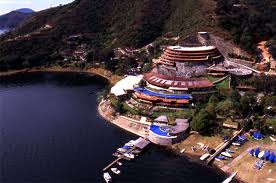
Valle de Bravo is a town and municipality located in State of Mexico, Mexico. It is located on the shore of Lake Avándaro, approximately 156 km southwest of Mexico City and west of Toluca on highways 15, 134 or 1. It takes about 2 hours to drive from Mexico City to Valle de Bravo, making it a popular weekend getaway for the capital's affluent upper class.


The town has several names during its history including San Francisco del Valle de Temascaltepec, Temascaltepec de indios, Villa del Valle. The original names including Temascaltepec caused confusion with the nearby "Real de Minas de Temascaltepec", now Temascaltepec, so the county was known as "El Valle" (The Valley). The honorific "de Bravo" was added later to recognize Nicolás Bravo who fought at the Castle of Chapultepec during the Mexican-American War. Its glyph includes the image of a temascal in reference to its original name.
In 1971 Valle de Bravo was known as typical city (ciudad típica) and magical town (pueblo mágico) in 2005. The town and the surrounding area are well known in Mexico as a tourist destination, mainly because it is only 2 hours away from Mexico City.


Ciudad Hidalgo Michoacan

Ciudad Hidalgo Michoacán
Proyecto de INGLES SITIO 1

Today, the city has mostly modern construction and streets, as one of Michoacán’s ten principal municipalities. However, it retains some of its rural character, especially economically. The city holds an annual fair dedicated to preserved fruits and vegetables during Holy Week, featuring home-made preserves of fruits and vegetables. Foods of this type have been made in this area since the beginning of the 20th century. The city is also host to the largest furniture exposition in Michoacán, the Expo Mueble and the Expo Feria de Todos los Santos is related to Day of the Dead and All Saints Day.


Its principal monument is a 16th century church with a former monastery. It conserves its atrium and original monolithic atrium cross sculpted by indigenous hands. This cross rests on a pyramidical base with a skull and bones. It also contains the coat of arms of the Franciscan order. The pyramidical base and skulls display an indigenous influence, as does the obsidian mirror located on the cross itself which was the symbol of the god Tezcatlipoca (god with the sacrificed foot) who was worshiped by both the Aztecs and the P’urhépecha. The church contains two notable baptismal fonts. The larger one may have been the basin of a pre-Hispanic public fountain from the 16th century. It is decorated with small angels and stylized lions. There are also letters on the rim of the font, but they do not spell out words. Tradition says they were used to teach literacy. The smaller font is monolithic and contains the image of a small nude angel in Renaissance style but with some medieval aspects.
One other important church is the Nuestra Señora del Perpetuo Socorro (Our Lady of Perpetual Succour). It is located just outside of the urban center. The work was inaugurated in 1977 and takes on a red color from the brick used in its construction. It is a modern construction with geometric lines.
The Casa de la Cultura (Cultural Center) of the city offers classes in dance, flower arranging, painting, textiles, computers, music and more for adults and children.